Why Does Driving Aggravate My Sciatica So Much?

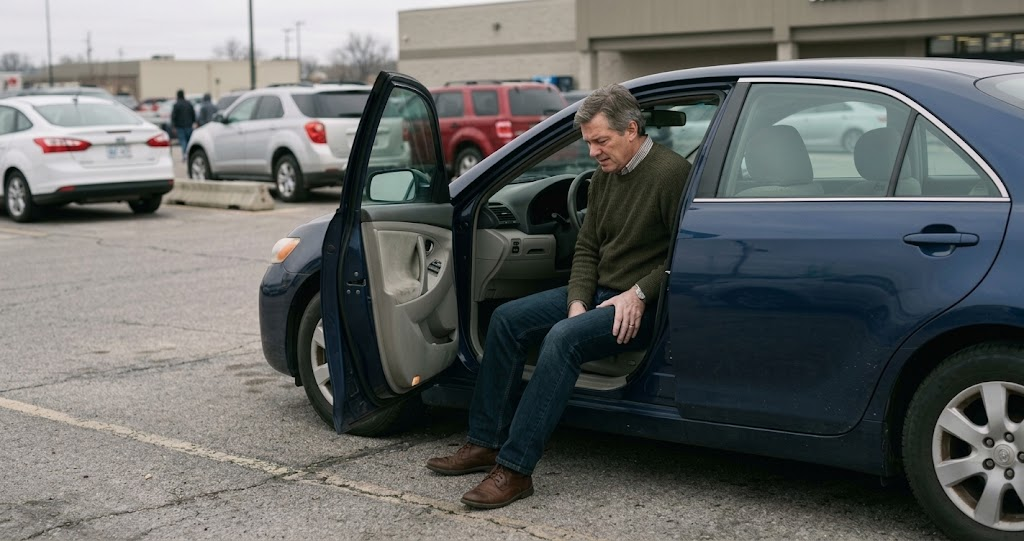
The first twenty minutes are fine. Somewhere past the forty-minute mark your leg starts to ache, then burn, and by the time you pull into the parking lot you can barely get out of the car. Driving seems to hit sciatica harder than almost anything else.
Driving keeps you sitting in one position, often for longer than your symptoms comfortably allow, and sitting can aggravate sciatica, especially when a nerve is already irritated. Your seat position can add to it, and so can the road: a meta-analysis of occupational whole-body vibration, the exposure professional drivers and machine operators face, found a pooled odds ratio of 1.92 for sciatica (Burström et al., 2015). That evidence has limits, and the authors noted possible publication bias for sciatica, so it is best read as suggestive, not conclusive. What matters for you is practical: adjust what you can, take breaks, and have a repeating pattern examined.
Why Does Driving Aggravate My Sciatica So Much?
Because driving stacks several things together. You hold one position, often for longer than your symptoms comfortably allow. Sitting can aggravate sciatica, especially when a nerve is already irritated, and a Mayo Clinic Health System neurosurgeon makes the same point about prolonged sitting and compressed nerve roots (Schiefer, 2021). Add a seat position that may not suit your back and the constant small jolts of the road, and an irritated nerve gets very little chance to settle.
I would want to know how long you can drive before the symptoms begin, where they travel, and whether getting out and walking helps. Those details help me understand what is aggravating your condition. You can try adjusting your seat so you can reach the pedals and steering wheel comfortably, and take breaks on longer trips when it is safe to stop. But if driving repeatedly brings on leg pain or numbness, I would want to examine you rather than assume changing the seat will solve the problem.
Can My Seat Position Make My Sciatica Worse?
It can contribute. If you are slouched, reaching too far for the steering wheel or pedals, or sitting unevenly, that position may leave your lower back and buttock area uncomfortable, and bumps in the road may add to that discomfort. None of this is exotic. It is a position held for a long time with your spine and hips arranged unfavorably, which is a hard situation for an already irritated nerve.
Does Road Vibration Really Matter for Sciatica?
It may, though the evidence is more modest than it sounds. The meta-analysis of occupational whole-body vibration found a pooled odds ratio of 1.92 (95% confidence interval 1.38 to 2.67) for sciatica, and its authors noted that some publication bias could have occurred, especially for sciatica (Burström et al., 2015).
A later systematic review of occupational mechanical exposures and chronic low-back pain rated the evidence for whole-body vibration and sitting as low or very low certainty, with odds ratios between 1.0 and 1.4, while finding moderate evidence for lifting, carrying, and non-neutral postures (Jahn et al., 2023). That review concerned chronic low-back pain rather than sciatica, and both studies looked at workplace exposure, not an ordinary commute. The honest summary is that vibration and long sitting are plausible contributors, not proven causes.
What Does Dr. Betty Want to Know About My Driving Pain?
Three things:
- How long you can drive before the symptoms begin
- Where the symptoms travel
- Whether getting out and walking helps
Those details help her understand what is aggravating your condition. A pattern that starts at the forty-minute mark and eases within minutes of walking tells a different story from one that follows you out of the car and into the evening, and she would rather hear that story from you than guess it.
Will Adjusting My Seat and Taking Breaks Fix It?
They are worth doing. Dr. Betty suggests adjusting your seat so you can reach the pedals and steering wheel comfortably, and taking breaks on longer trips when it is safe to stop. Staying active rather than resting is also what clinical guidance for sciatica recommends (Jensen et al., 2019).
But they are a first step, not a diagnosis. Her position is clear: “But if driving repeatedly brings on leg pain or numbness, I would want to examine you rather than assume changing the seat will solve the problem.” A better seat can make a drive more comfortable. It cannot tell you why the leg pain returns every time you sit through one.
Is It Safe to Keep Driving With Sciatica?
If numbness or weakness affects your ability to control the pedals safely, do not continue driving.
- Pain alone is different from numbness or weakness. Pain that makes a drive miserable is a reason to adjust and to be evaluated. Numbness or weakness that affects how well you can work the pedals is a reason to stop.
If it happens in the middle of a trip, stop at the next safe place. New or worsening weakness needs urgent medical evaluation.
Which Symptoms Can't Wait, Even if the Trigger Is Just Driving?
Get medical care now if you have:
- New or worsening leg weakness, including a foot that starts dragging or trouble lifting the front of your foot
- New difficulty urinating, loss of bowel or bladder control, or numbness around the groin, genitals, or inner thighs (the saddle area)
- Severe or worsening weakness or numbness in both legs
- Sudden major loss of feeling in your leg
- Back pain with fever, chills, or feeling generally unwell
- Unexplained weight loss alongside persistent back pain
Those symptoms call for immediate medical evaluation, not a scheduled chiropractic visit. Go to an urgent care or emergency room, or call 911 if symptoms are severe.
Short of that list, a flare that only shows up on long drives is a schedule-an-evaluation situation. A practical first step is to take the OKC Sciatica Check at OKCSciaticaCheck.com, which helps you organize what you are feeling before your visit.
How Is Blaming the Seat Different From Being Examined?
| Blaming the Seat Alone | Dr. Betty's Evaluation-First Approach |
|---|---|
| Assuming a better seat will solve it | Adjusting the seat as one step, not the whole answer |
| Driving until the pain forces you to stop | Taking breaks on longer trips when it is safe to stop |
| Treating the pattern as normal wear | Noting how long you can drive before symptoms begin, where they travel, and whether walking helps |
| Ignoring numbness while driving | Not continuing to drive if numbness or weakness affects control of the pedals |
| Waiting for it to go away on its own | Examining you when driving repeatedly brings on leg pain or numbness |
Both approaches start with the same uncomfortable drive. Only one finds out why it hurts.
What Should I Do Next if Driving Keeps Aggravating My Sciatica?
Notice how long you can drive before your symptoms begin, where they travel, and whether walking helps, and check yourself against the red-flag list. Adjust your seat so you can reach the pedals and wheel comfortably, and take breaks on longer trips when it is safe to stop. You do not need to know whether the cause is your seat, your spine, or something else before you call; that is what the evaluation is for. If the pattern keeps repeating, or it is starting to interfere with your sleep, walking, work, or daily activities, that is reason enough to schedule. You can call or text the office, or book online, and the team is glad to answer questions before you schedule anything.
Take the Next Steps at OKCSciaticaCheck.com
If driving is the only thing that sets it off, it is tempting to treat the car as the problem and a new cushion as the answer. But a symptom that shows up on every drive is a pattern, and a pattern can be examined. Waiting for a seat adjustment to solve it can mean weeks of commutes spent guessing.
- Precision Care Chiropractic — 5850 W Wilshire Blvd, Oklahoma City, OK 73132
- Call or text: (405) 803-8770
- Book online: precisioncarechiropractic.com/new-patient-form
- Take the next steps at OKCSciaticaCheck.com.
References
- Burström, L., Nilsson, T., & Wahlström, J. (2015). Whole-body vibration and the risk of low back pain and sciatica: a systematic review and meta-analysis. International Archives of Occupational and Environmental Health, 88(4), 403–418. https://link.springer.com/article/10.1007/s00420-014-0971-4
- Jahn, A., Andersen, J. H., Christiansen, D. H., Seidler, A., & Dalbøge, A. (2023). Occupational mechanical exposures as risk factor for chronic low-back pain: a systematic review and meta-analysis. Scandinavian Journal of Work, Environment & Health, 49(7), 453–465. https://doi.org/10.5271/sjweh.4114
- Schiefer, T. K. (2021, July 9). Sciatica and radiculopathy: Peculiar names for shooting back, leg pain. Speaking of Health, Mayo Clinic Health System. https://www.mayoclinichealthsystem.org/hometown-health/speaking-of-health/sciatica-and-radiculopathy-peculiar-names
- Jensen, R. K., Kongsted, A., Kjaer, P., & Koes, B. (2019). Diagnosis and treatment of sciatica. BMJ, 367, l6273. https://doi.org/10.1136/bmj.l6273
Frequently Asked Questions
Why does driving make my sciatica so much worse than other activities?
Driving keeps you in one position for a long stretch, often longer than your symptoms comfortably allow, and sitting can aggravate sciatica when a nerve is already irritated. Seat position and bumps in the road can add to the discomfort.
Can road vibration cause sciatica?
It may contribute, but the evidence is suggestive rather than conclusive. A meta-analysis of occupational whole-body vibration found a pooled odds ratio of 1.92 for sciatica, and its authors noted possible publication bias (Burström et al., 2015). A later review rated the evidence for vibration and sitting as low or very low certainty for chronic low-back pain (Jahn et al., 2023).
Will a better seat or lumbar cushion fix my sciatica?
It may make a drive more comfortable, and adjusting your seat so you can reach the pedals and wheel comfortably is sensible. But a cushion cannot tell you why the pain keeps coming back on every drive. Take the OKC Sciatica Check at OKCSciaticaCheck.com to organize what you have noticed before your visit; the examination is what answers the question.
How long should I drive before taking a break?
Dr. Betty does not give one number for everyone. She asks how long you can drive before your symptoms begin, and that is a useful benchmark for planning breaks on longer trips, which she recommends when it is safe to stop.
Is it safe to keep driving with sciatica?
If numbness or weakness affects your ability to control the pedals safely, do not continue driving. Pain alone is different: it is a reason to adjust and be evaluated. New or worsening weakness needs urgent medical evaluation.
What does Dr. Betty ask about my driving pain?
How long you can drive before the symptoms begin, where they travel, and whether getting out and walking helps. Those details help her understand what is aggravating your condition.
Are there symptoms that can't wait for a scheduled appointment, even if the trigger is just driving?
New or worsening leg weakness, including a foot that starts dragging, needs urgent medical evaluation. New difficulty urinating, loss of bowel or bladder control, or numbness around the groin, genitals, or inner thighs calls for emergency evaluation. Back pain with fever, chills, or feeling generally unwell needs urgent medical assessment.
This article is for educational purposes only and is not medical advice, diagnosis, or treatment. It does not establish a doctor-patient relationship and does not guarantee any outcome or result. Individual results vary. Only an in-person evaluation by a qualified provider can determine what may be contributing to your symptoms and what care, if any, is appropriate for you. If you are experiencing any of the red-flag symptoms described in this article, seek immediate medical evaluation.
Ready for a Reasonable First Step?
Use the free, non-diagnostic Next-Step Checker, or call Precision Care Chiropractic in Oklahoma City to ask about an in-person evaluation.
Keep Reading
Why Does My Foot or Big Toe Go Numb When I Sit or Drive?

Why Is My Sciatica Worse at Night?

When Should I Stop Waiting and See a Doctor About Sciatica?